Case Study · 03
A Masters major project — designing a smart virtual personal assistant that connects international students to their university, reducing complexity and creating a once-in-a-lifetime campus experience.
01 · The Problem
International students arriving at a large university for the first time face a system that was never designed with them in mind. The campus is vast, the information is scattered, and the social layer is invisible until it's too late.
The core problems: getting around campus, accessing the right information at the right time, discovering events and activities, feeling socially involved, and staying safe — all at once, all on day one.
Existing university apps addressed logistics, not experience. None of them felt like a friend. Ami was designed to.
02 · Context & Role
This was a Masters major project — meaning there was no team to hand off to, no brief to follow, and no existing product to build on. The entire scope was self-directed, from identifying the right problem to shipping a final prototype.
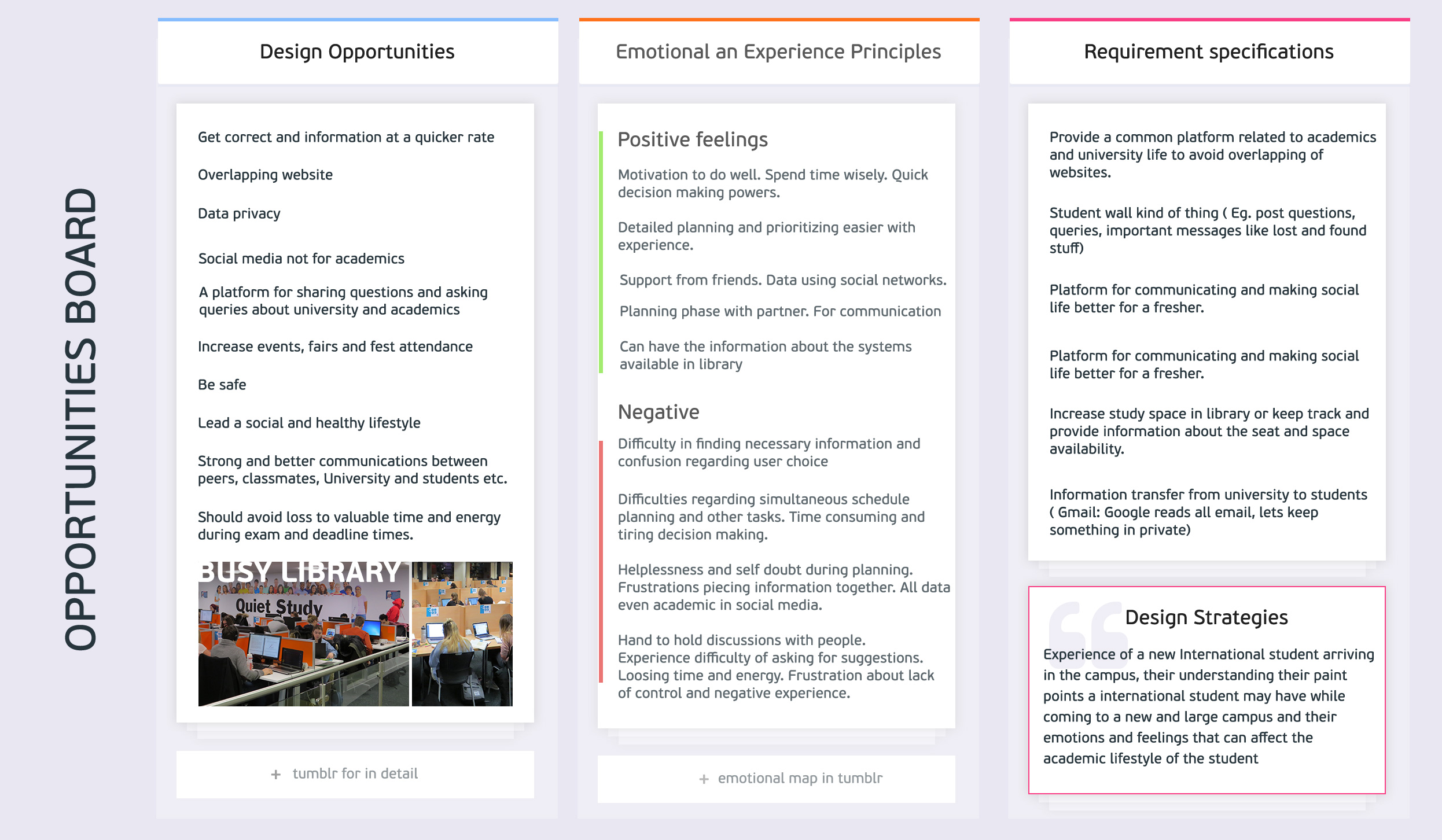
Identifying the right problem through research, observation, and user interviews with international students.
Exploring the solution space through node diagrams, scenario storyboards, and concept validation.
Mood boards, logo design, full branding system, and final high-fidelity prototype in Marvel App.
03 · Storyboarding
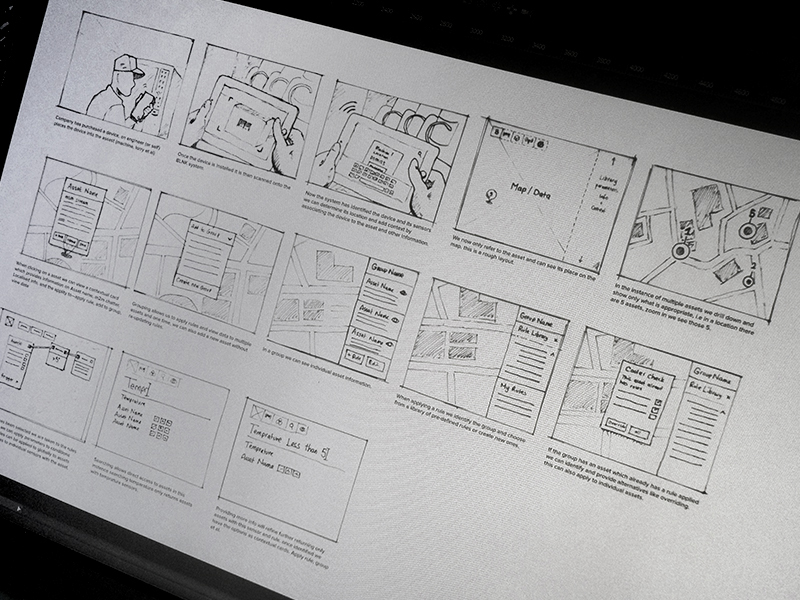
Node diagrams were used to find different features and identify user needs — mapping the connections between people, places, and information that international students had to navigate every day.
These provided the basis for scenario storyboards: hand-drawn narratives that explored specific moments in a student's journey — arriving on campus, finding a lecture hall, discovering a social event, asking for help at midnight.
Each storyboard was a hypothesis. Each one got tested before anything was built.
04 · Site Map
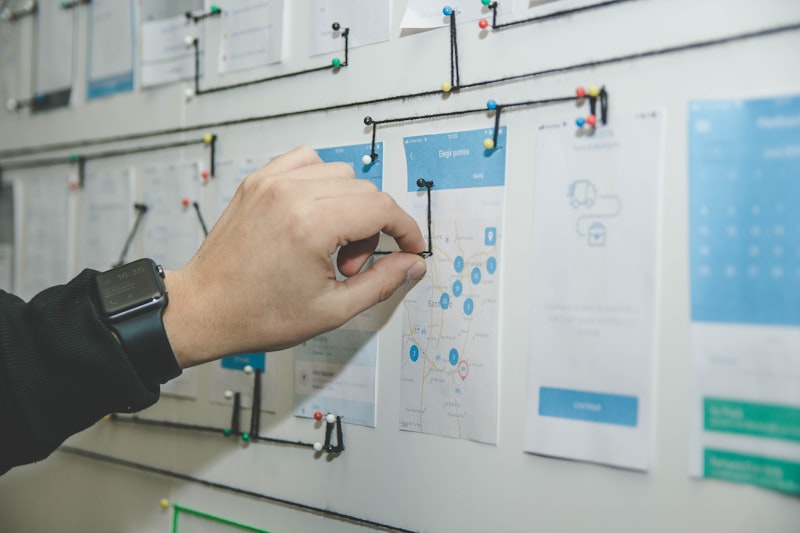
Before wireframing a single screen, the full information architecture of Ami was mapped — from the Splash Screen through account creation, to the Home/Menu hub and every feature branch beyond it.
Key feature areas included: Services, Campus Map, Calendar, Courses/Study Room, and a Student Wall — each with their own sub-features covering university services, augmented map, academic materials, social sharing, and event invitations.
The site map ensured nothing was designed in isolation. Every screen had a logical home.
05 · Lo-Fi to Hi-Fi
Low-fidelity prototypes were used to carry out user testing sessions. Real feedback was collected and corresponding alterations were made — the app evolved through use, not assumption.
A Marvel prototype was created to understand user pain points in context. Participants interacted with tappable flows, revealing friction that static wireframes would never catch.
High-fidelity prototyping then brought it all together — mood boards, logo design, brand system, and the final app interface. The visual identity was built to feel warm and intelligent: a smart friend, not a corporate tool.
06 · AR Research
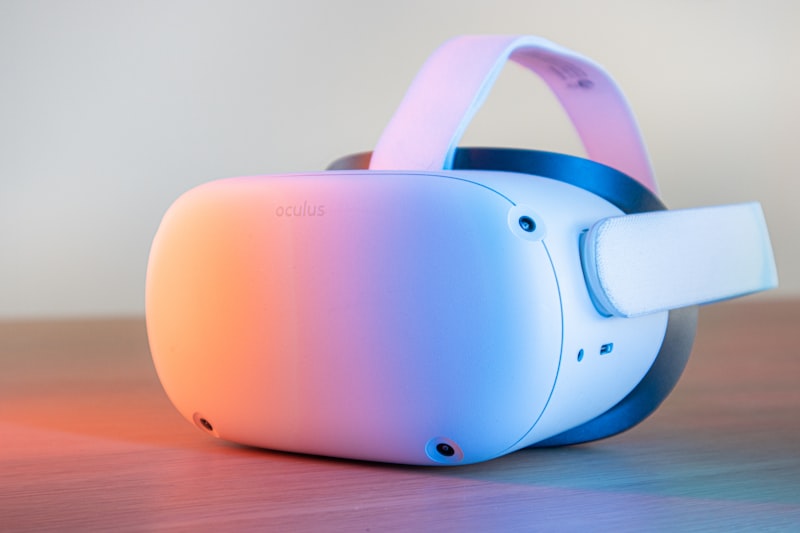
Ami included a first deep dive into augmented reality — a developing technology that opened up possibilities far beyond a standard mobile interface.
AR was researched for its potential in: interactive 3D campus viewing, behaviour analytics, location-based content, event discovery, and social sharing between students. An augmented campus map was a core feature of the final concept.
This research sparked a lasting interest in AR/VR as a design medium — directly leading to the kind of immersive work later done with Radisson Hotel Group.
07 · Final Outcome
The final solution is a mobile app which acts as a smart assistant — a best friend forever — to the international student who is new to university and unfamiliar with the large ecosystem.
Ami doesn't just inform. It adapts, improvises, and overcomes — addressing three key problems: reducing campus complexity, acting as a personal assistant, and creating a once-in-a-lifetime experience both socially and academically.
Think of the campus as a large organism. Every student is an organ. For the organism to work, every organ must function well. Ami was built to make that happen.
"Make the student get involved in the events, increase event attendance — make the whole campus a big organism and the student be one of its organs."— Ami, Concept Statement
What's Next
If you have a product that needs to feel as intuitive as a good friend — let's talk.
Get in Touch No commitment · Free first conversation · 24hr response