Case Study · Mobile Product App

HELPCHAT

One app to replace them all. Helpchat was built to help people get more things done — restoring balance in the battle between people and tasks.

My Role

UX & Brand Lead

Launched

September 2015

Platform

iOS & Android

Outcome

Acquired by Amazon

Too Many Apps. Not Enough Done.

Users were keeping dozens of individual apps on their devices — one for each task, service, or need. The result: overloaded phones, fragmented experiences, and daily frustration.

Helpchat was designed to solve this. One powerful app that brings tasks, services, and assistance together — less clutter, more done.

The target audience: 15 to 40-year-olds who rely on their smartphones for daily tasks and are comfortable in the digital world. People who want their phone to work for them, not against them.
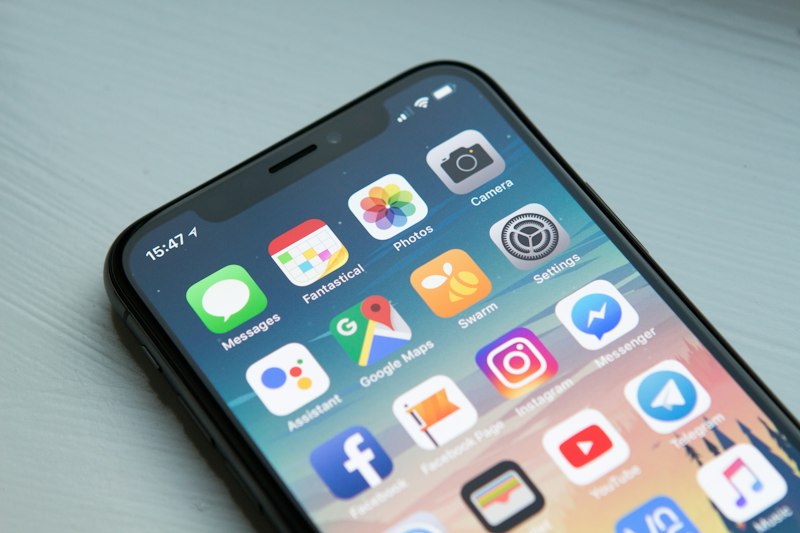
Mobile app problem
The fragmented app experience users were stuck with
What I Was Brought In to Do

01

Branding & Design System

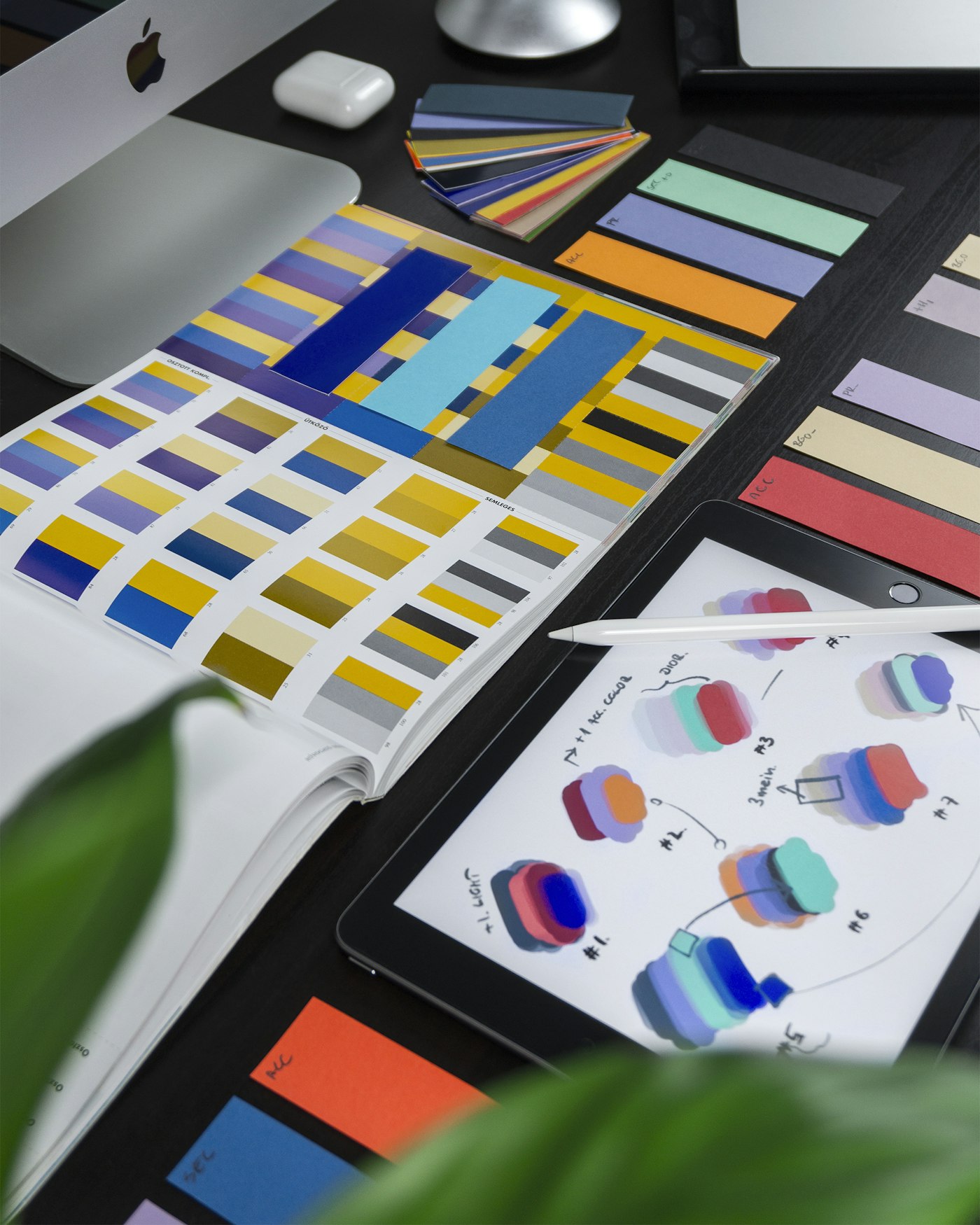
Created the complete brand identity and a scalable design system — from atom-level components to full modular page structures.

02

User Research

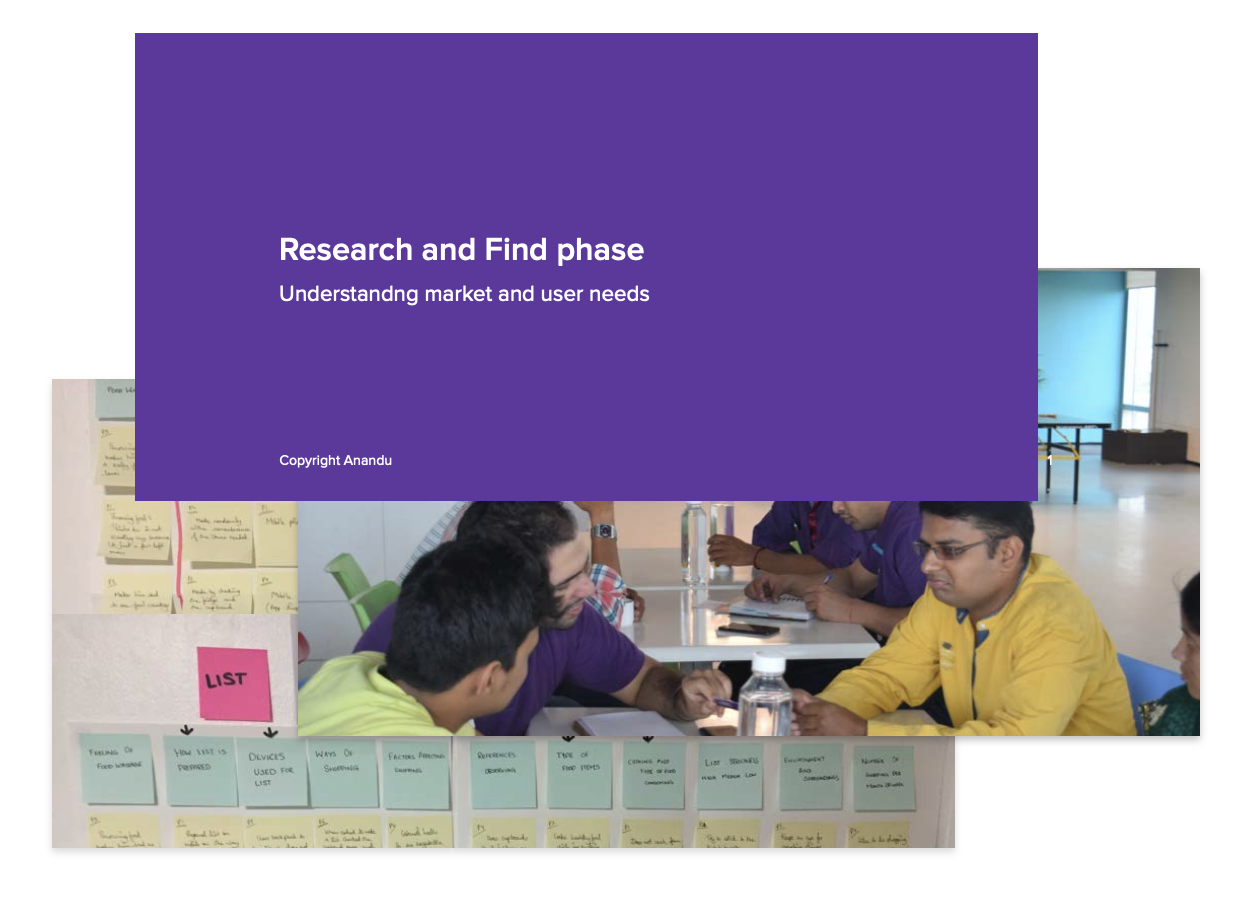
Led user research workshops including real user interviews, storyboarding sessions, and usability testing with tappable prototypes.

03

Demo-First Prototyping

Built interactive prototypes early, shared on real devices, allowing users to experience the app before a line of code was committed.

04

Design–Dev Bridge

Maintained alignment between design and development, providing pixel-perfect guidelines to ensure an accurate build across all platforms.

Discovery phase
Discovery and strategy mapping

Starting With Deep Thinking

The process started with a structured discovery phase: identifying the unique business value, mapping product features, defining customer archetypes, and studying the product funnel.

I studied best-in-class experiences in the space and used those learnings to craft a UX strategy that balanced business needs with what customers actually wanted.

This wasn't about copying what worked elsewhere. It was about understanding what this specific user group needed — and designing toward that.

Mapping Every User Journey

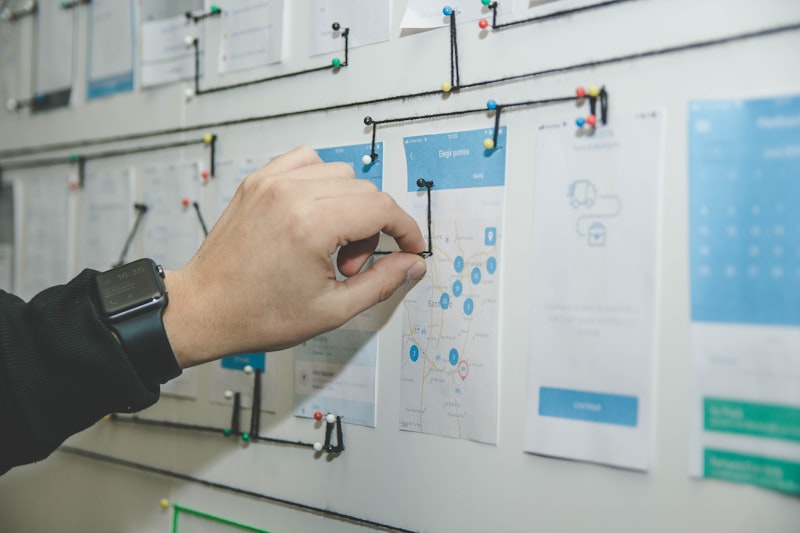
Storyboards were created for every scenario we expected users to travel through — exploring what features they needed, and where the pain points appeared.

Why storyboards? They gave us a real-time picture of user scenarios before investing in high-fidelity design. Problems were found and fixed in minutes, not days.

Hand-drawn sketches were used for both user testing and stakeholder presentations. Fast to produce, fast to change, and powerful enough to validate ideas with real users immediately.

Storyboarding
Hand-drawn storyboards for rapid user testing

Let Users Experience It Before It Was Built

One of the most important strategic decisions: ship a real demo early. Not a presentation deck. Not a video. A touchable prototype on users' own devices.

This allowed fans to experience the app risk-free — understanding the product, offering, and benefits first-hand. It drove sign-ups, extended daily engagement, and gave us real feedback loops before launch.

The prototype was also used with investors and boards. Putting the experience directly in their hands — not on a slide — made the difference.

This approach secured the funding needed to continue development and bring the product to market.

"We wanted to get the app into the public as soon as possible so we could learn, get feedback, and act on it. The demo-first approach wasn't just a design decision — it was a business strategy."
— Anandu Sivan, UX & Brand Lead

Building the Foundation

Design system

I established a complete library of design elements that formed the basis of Helpchat's design system — usable throughout the product to rapidly create screens and build content.

From modular components to atom-level design elements, the system was built to support both the engineering team and future designers joining the project.

Pixel-perfect guidelines were provided to developers to ensure design accuracy across all platforms. No interpretation. No drift.

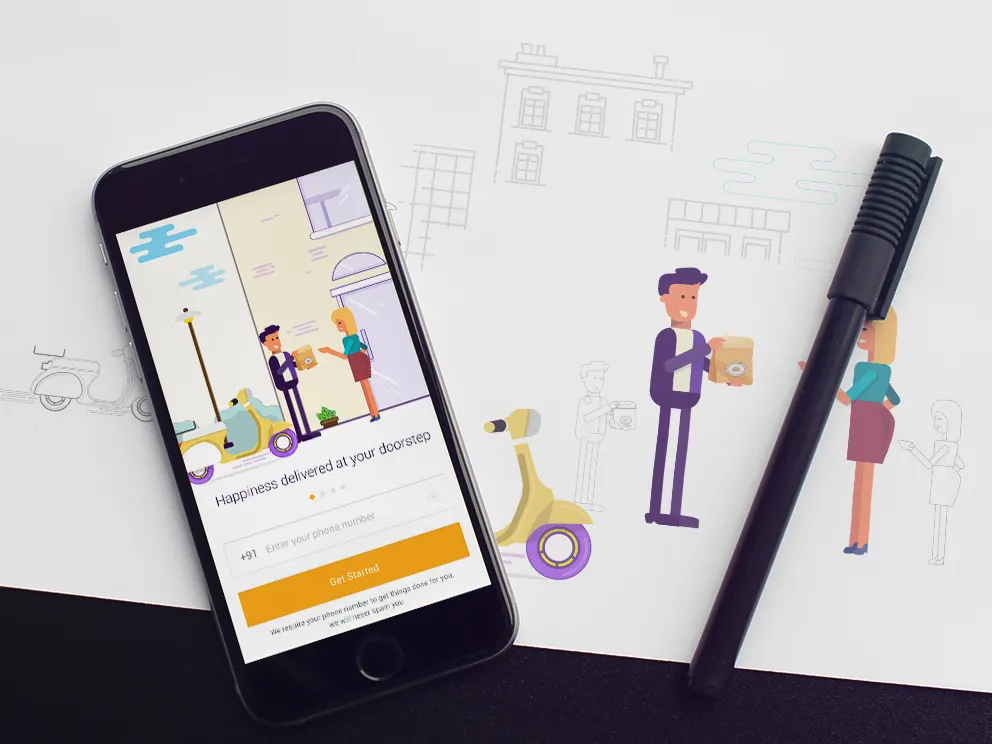
I also created a bespoke illustration style that ran consistently across the entire app — a visual language that could be followed by other creatives in the company.

Illustration style
Custom illustration style created for Helpchat

A Visual Language Built to Scale

Helpchat needed a consistent, ownable visual identity — something that could be maintained and extended as the team grew.

I designed a custom illustration style that ran throughout the app. Clear enough to follow. Distinctive enough to own. Scalable enough to hand off.

Every illustrative element was documented so that any creative joining the team could produce work that felt native to the brand without starting from scratch.

Launch & Amazon Acquisition

The app launched in September 2015. Download numbers surged from day one. Real users gave real feedback — and the team used every piece of it.

Product reviews and interviews were carried out each weekend using tappable prototypes with real users. This wasn't a one-time research sprint. It was a continuous feedback loop built into the product culture.

After 18 months of successful release, Helpchat was acquired by Amazon for an undisclosed fee.

2015
Launch Year
18mo
Time to Acquisition
Acquired by Amazon

ACQUIRED BY
AMAZON

After 18 months of successful release, continuous user research, and a product built on real feedback — Helpchat was acquired by Amazon for an undisclosed fee.

Want to Work Together?

If you're building a product and need a designer who starts with the problem, not the pixels — let's talk.

Book a Free Call →
No commitment  ·  Free first conversation  ·  24hr response